
Automate your content strategy with Claude Tag
Claude Tag drafts and updates for a whole team, but from what? How to feed it your experts' and customers' knowledge, so it automates content AI engines cite.
June 28, 2026
Godefroy
- Search is shifting to generative engines (ChatGPT, Perplexity, AI Overviews), which cite fresh, first-hand content.
- Claude Tag can draft and update at the scale of a whole team. The risk is industrializing slop.
- Content that stands out needs raw material: your experts' knowledge, your customers' stories, angles an AI cannot invent.
- A voice interview people answer on their own time goes deeper than a form. An agent creates one over MCP, so the material arrives without anyone booking a slot.
- In ambient mode, Claude Tag re-interviews on a routine and keeps your pages alive, citable and up to date.
You have Claude Tag in Slack. You tag @Claude and it drafts: a LinkedIn post, a blog article, a case study, a product page. At the scale of a team, it is tempting to automate a whole content strategy this way. The open question is what it drafts from.
Because content written from nothing reads generic. That is AI slop. And automating slop just means producing it faster. So this article is less about the drafting tool than about the material you give it, because that material is what separates content people read from content people scroll past.
Why automate, and why now
The context has changed. A growing share of search is shifting to generative engines: people read the answer straight inside ChatGPT, Perplexity or Google’s AI Overviews, without clicking. And Google and Bing now reward original content, while the AI answers layered on top do exactly the same. The impact is direct, on both your SEO in classic search and your GEO, how often you surface inside generative engines. Producing content has never been more necessary to stay visible, and never more pointless when that content is interchangeable.
These engines favor fresh, first-hand content, and a recently refreshed page gets cited far more often than one frozen two years ago. The umpteenth article identical to the others stays out. Visibility is now won on two axes: originality and freshness.
That is what pushes teams to automate: keeping up the pace of publishing and updating without spending whole days on it. Websites designed for 2026 are in fact built to be driven by agents: a static foundation readable by AI (Astro, MDX), skills to industrialize production, routines that keep the site current. Claude Tag fits right in: it is the agent that drafts and updates for the whole team. But the more production is industrialized, the more the bottleneck moves. The new bottleneck is having something original to say.
What Claude Tag does, and its limit
For a quick recap, Claude Tag replaces the old Claude in Slack app with a persistent agent. It is multiplayer (one shared Claude per channel), asynchronous (you delegate, the result waits in the thread), and sometimes proactive (in ambient mode it watches its channels without being tagged). An admin attaches an access bundle to each channel: a named set of credentials and tools, drawn from more than 300 integrations available through the Model Context Protocol (MCP).
Connect it to your past content, your documentation, your analytics, and it knows how to use them to write. That is powerful, and it is also the limit: it only reaches what has already been written somewhere.
| What Claude Tag already reaches | Out of reach by default |
|---|---|
| Your past content, your documentation | The unique expertise in your experts’ heads |
| Your analytics, your SEO data | The story a customer actually tells |
| The wiki, internal notes and briefs | The original angle nobody has framed yet |
| The editorial line | The verbatim that makes content feel alive |
Your analytics tell you which article performs. They do not give you the customer anecdote that would make the next one. That material lives in a conversation nobody wrote down for you.
Plausible filler instead of material
Ask @Claude to “write an article about our new product” without giving it real raw material, and it will fill the gap with something plausible: the familiar phrasing and generic ideas anyone would get with the same prompt. Except here it goes out for the whole team, with the authority of an agent.
The model has nothing to do with it. You are asking it to write about material it does not have. And that is exactly what generative search penalizes: an article anyone can produce with the same prompt has no reason to be cited over another. Publishing what anyone can generate does not set you apart. Publishing your team’s unique expertise does.
The raw material of your content
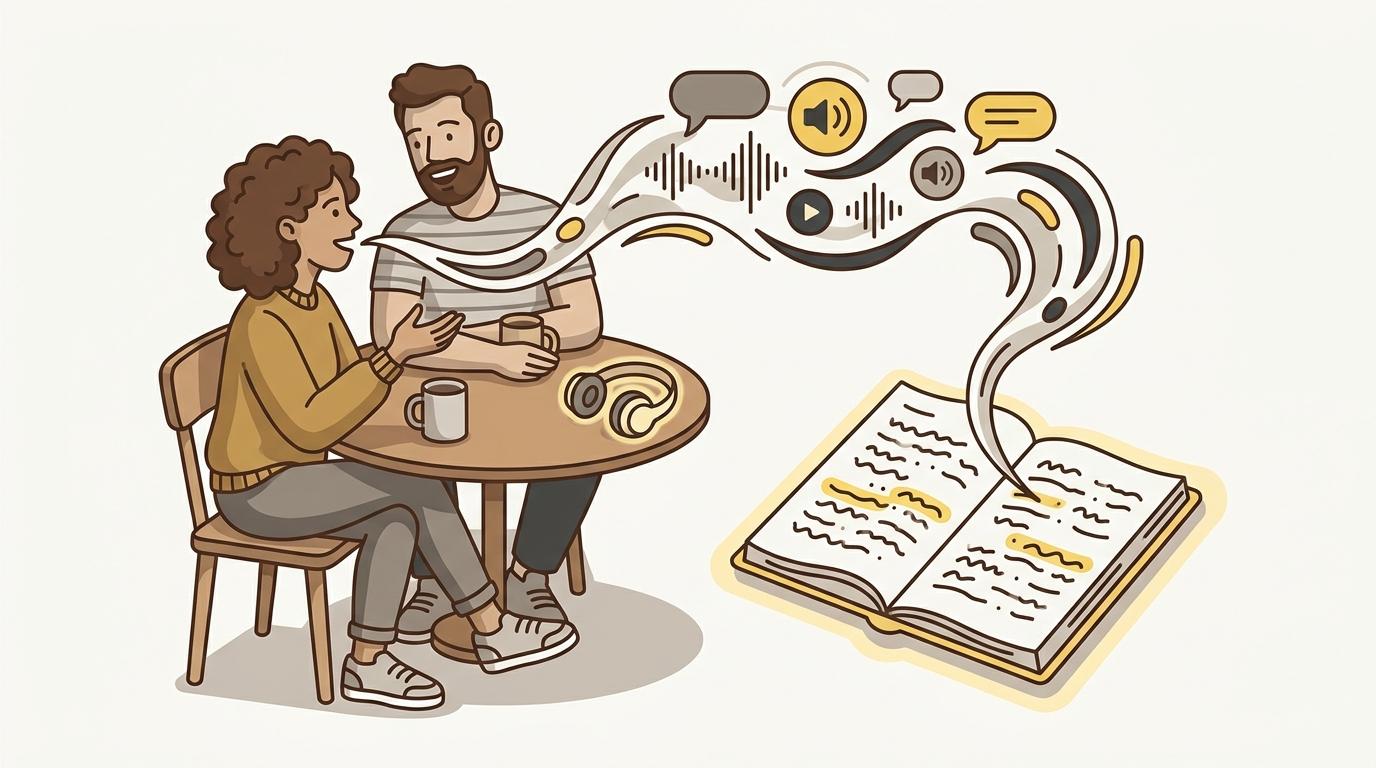
To feed a drafting agent, you have several sources, separated along three criteria: setup, depth (a one-line quote versus a detailed story) and freshness (an old article versus an angle obtained today).
| Source | Setup | Depth | Freshness |
|---|---|---|---|
| Already-written content and data | Low (an MCP tool) | Variable | Stale |
| Forms and surveys | Low | Shallow | Fresh |
| Manual interviews | High (scheduling, note-taking) | Deep | Fresh |
| AI voice interviews | Low (an MCP tool) | Deep | Fresh |
Already-written content is the first instinct: recycle your past articles, your docs, your support tickets. It is immediate, but it is nothing new. Over time, the AI ends up quoting itself and the content goes in circles. Any agent fed only on your own documents has the same limit: it knows what your team already knows, and nothing more. What users say about their problem is most often missing from an AI agent’s context.
Forms and surveys give you a customer quote, fast. Their limit is structural: fixed questions, short answers typed in a hurry. You rarely get the anecdote or the angle that makes good content.
Interviews are the source of real angles and living verbatims. A conversation follows the thread of a thought, digs where it matters, surfaces the story you would not have guessed. Their problem has always been cost: scheduling, running, transcribing. That does not scale, so in practice almost nobody does it, even though it is exactly what original content needs.
Asynchronous voice interviews
Asynchronous voice interviews remove that cost, and it is why we built Raconte. You describe the interview in a prompt, an AI runs the conversation by voice, the person answers whenever they have a moment, and you get back the transcript, a summary and a sentiment analysis.
It keeps all the depth of an interview.
| Form | Raconte interview | |
|---|---|---|
| Questions | Fixed, identical for everyone | Adapted live to each person |
| Follow-ups | None | The AI digs when an answer deserves it |
| Answer format | Short text, often rushed | Voice, natural and detailed |
| Effort for the respondent | High (they have to write) | Low (they just talk) |
For an agent like Claude Tag, it is first of all one more MCP tool in the access bundle, so @Claude can use it on its own: create an interview, send the invitations, then read back the transcripts and summaries before drafting. Both tools are asynchronous. Interviews take time (people answer when they can), and an asynchronous agent does not mind, it moves on and comes back with the material.
In practice, in a #content channel, it looks like this:
@you     @Claude we want a case study on the Acme project.         Interview our architect and two people on the client side,         then propose an angle and a first draft.
@Claude  On it. I am creating the voice interviews and sending the         invitations. I will come back with the material and an angle.
         … (later, @Claude comes back on its own) …
@Claude  3 interviews completed. The angle that emerges: the migration         cut deployment time to a third, and it was the human support         that made the difference, not the tool. Strong client         verbatims on that. First draft of the case study in the thread.
Nobody scheduled a call or wrote a questionnaire. The angle and the quotes come from the real thing.
Keeping content alive, on a routine
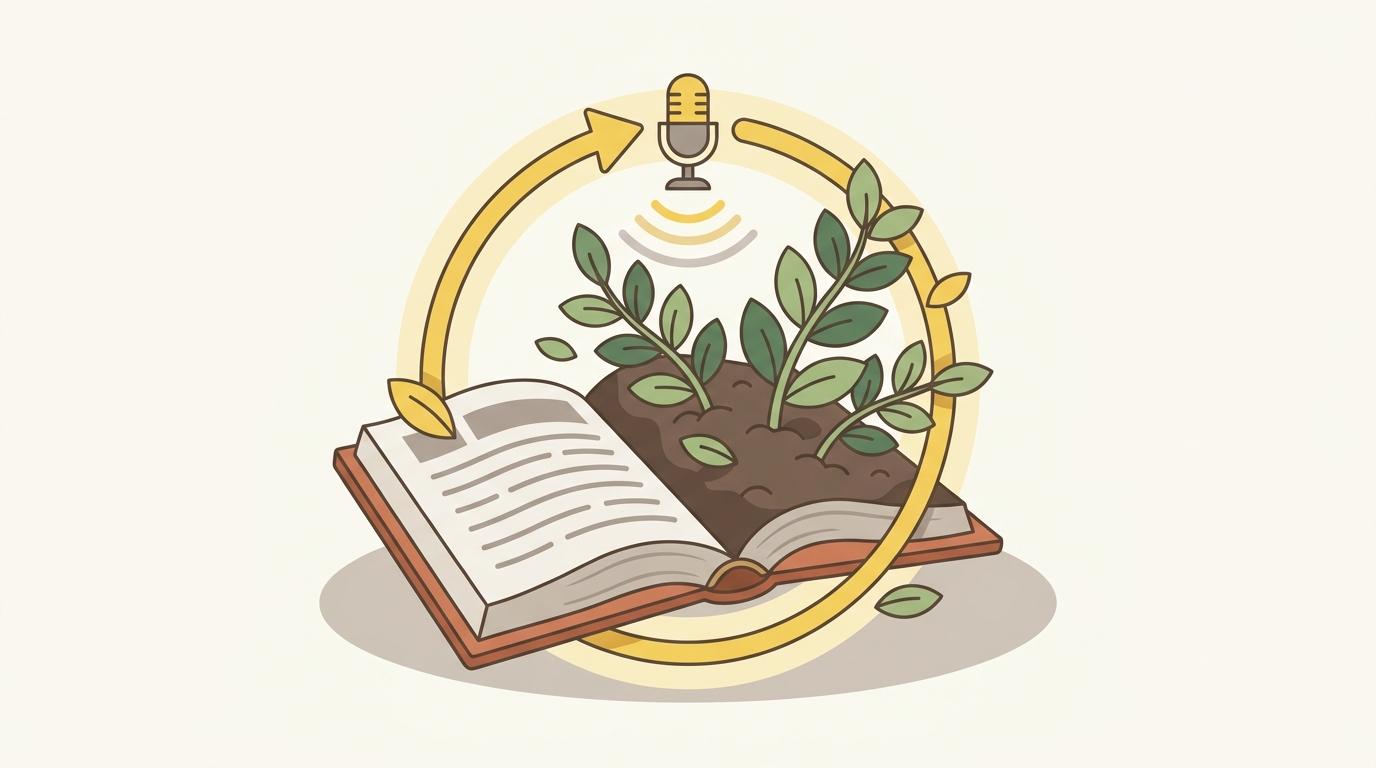
Automating a content strategy also means maintaining what is already published. “Evergreen” has changed meaning: it now describes living content kept current continuously, where it used to describe an article published then forgotten. Figures, versions and examples refresh on every relevant change, while the structure and the angle stay stable. A page kept current stays citable, a frozen one drops out.
Claude Tag’s ambient mode is built for this. A scheduled routine can run a handful of interviews and reinject fresh verbatims into your pillar pages. On every product release, @Claude interviews a few users and updates the relevant case study. Every quarter, it re-interviews an expert and refreshes the reference guide. First-hand content does not expire on publication day.
The trap to avoid is churn for churn’s sake: republishing with nothing new to say degrades your freshness signal instead of improving it. A routine is only worth it if it brings fresh material, which is exactly what a new interview guarantees.
Which material for which content
No source is better in the absolute. The right reflex is to start from the content you want.
- You want a number, social proof: your analytics and existing content are enough.
- You want to update or recycle a topic already covered: start from your written content, refreshing it.
- You want a fresh angle, a story, an expert opinion: you need a conversation. Asynchronous voice interviews are the only source that holds at scale.
A few guardrails hold for any source. When you are after a trend, build from twenty answers rather than three. Keep your questions open instead of feeding the answer into them (“walk me through this project” opens, “what did you like?” leads). Keep a human in the loop: @Claude’s draft is a starting point, and the full transcripts are there to check. Finally, you can keep generation in your own tools, in your own editorial line: Raconte provides the material, you provide the style.
To wire the collection in
If voice interviews match your need, connecting Raconte to Claude Tag takes a few minutes: creating an API key, adding the MCP server to the channel’s access bundle, and @Claude can launch interviews. The step-by-step guide covers the whole setup.
Beyond the choice of a tool, Claude Tag drafts from what is written, and it is up to you to decide how to give it access to what is not written yet. That is where you build a content strategy nobody can copy, and one that gives AI engines a reason to cite you.
Connect Raconte to Claude Tag