
The best customer feedback tools in 2026, sorted by the moment they ask
We compared 11 customer feedback tools across interviews, surveys, in-app prompts and VoC platforms: who asks the follow-up, what it costs, how to plug it in.
October 4, 2026
Godefroy
- Pick a customer feedback tool by the moment you want to ask: in a conversation, in a survey sent after an event, inside the product, or across every channel of a large company.
- Surveys and in-app prompts give you a score you can track. They rarely tell you what to change, because people skip the open box or type a few words.
- AI follow-up questions are now common in surveys, but most survey tools cap them at one or two typed questions.
- Delighted, the NPS tool owned by Qualtrics, shut down on 30 June 2026, so its customers need a replacement.
- Enterprise voice of the customer platforms publish no prices, while most survey and interview tools let you start free without talking to sales.
The best customer feedback tool depends on the moment you ask. To hear the story behind a score, use an interview tool where an AI asks the follow-up questions: Raconte, UserCall or Perspective AI. To measure a score after a purchase or a support ticket, a survey tool such as Tally, Typeform or SurveyMonkey does it for little or nothing. To catch people while they use your product, Hotjar (now part of Contentsquare), Pendo or Sprig put a short prompt inside it. And to run one listening program across a large company, Qualtrics and Medallia are built for that. This page compares the eleven tools on who asks the follow-up question, what each costs to start, and how you connect each one to the rest of your stack, with prices read on each vendor’s site in October 2026.
Raconte publishes this article and is one of the eleven tools it compares. We put our own group first because this is our article. The four groups answer four different questions, so their order says nothing about which one is better. Start with the group that matches your question. The numbers run from 1 to 11 so the list reads in one go, but a number only ranks a tool against the others in its group. Inside a group, the order follows one rule you can check and dispute: how far you can go on your own before talking to sales. Every entry links to the vendor’s site.
One tool from the usual lists is missing on purpose. Delighted, the NPS tool Qualtrics bought in 2018, stopped annual renewals in July 2025 and shut down on 30 June 2026. The delighted.com domain now redirects to a Qualtrics page. If you are replacing it, look at the survey tools: Tally, Typeform and SurveyMonkey.
How we compared them
We read each vendor’s pricing page, product pages and help center in October 2026, and compared the eleven tools on six criteria.
- We note who asks the follow-up question when an answer stays vague: an AI in a spoken conversation, an AI adding one or two typed questions, or branching rules you write in advance.
- We record the price to start. A published number counts for more than a quote. Where a vendor publishes nothing, we say so.
- We note how you buy it: a free plan, a trial, or a call with sales.
- We check whether you can drive it from code: a public API, webhooks, an MCP server for AI agents.
- We check the languages, French included, and where the data is hosted when the vendor says.
- We list what the tool does beyond collecting feedback: analytics, session replay, onboarding guides, dashboards.
Inside each group, a free plan that renews every month comes first, then a one-off free allowance, then a quote with no published price. Between two tools at the same level, the lower published paid price comes first. That order suits a small team that wants to collect feedback this month. A team that ranks on certifications, panel size or the depth of the dashboards would put tools such as SurveyMonkey, Sprig or Medallia higher.
| Tool | When it asks | Who asks the follow-up | Free plan | Paid plans from | Developer access |
|---|---|---|---|---|---|
| Raconte | Interview, by link or email | AI, out loud, during the whole conversation | 60 interview minutes a month | $0.12 per minute of speech, top-ups from $12 | REST API, MCP, webhooks, CLI, SDK |
| UserCall | Interview, by link or product event | AI, by voice | First interview free | $89 a month | REST API, MCP, webhooks |
| Perspective AI | Conversation, by link or embed | AI, by voice or text | 100 credits at signup | $99 a month | REST API, MCP, webhooks, SDK |
| Tally | Form, after the event | Rules you write | Unlimited forms and responses | €20 a month | API, webhooks, MCP in beta |
| Typeform | Form, after the event | AI, up to two typed questions, from $169 a month | 10 responses a month | $28 a month, billed yearly | REST API, webhooks, MCP |
| SurveyMonkey | Survey, after the event | Rules you write | Basic plan, 10 questions per survey | €36 a month, billed yearly | REST API, webhooks, Claude connector |
| Hotjar (Contentsquare) | On the website or in the app | Rules you write | 100 responses a month | $99 a month | API on Pro, MCP |
| Pendo | Inside the product | Rules you write | Up to 500 monthly active users | Quote | REST API, webhooks, MCP |
| Sprig | Inside the product, email, link | AI, in typed surveys | None | Quote | API, webhooks |
| Qualtrics | Every channel | AI, up to two typed questions per survey | 500 responses on the free account | Quote | REST API, MCP |
| Medallia | Every channel | Rules you write | None | Quote | REST API, webhooks |
Tools that interview your customers
These three tools hold a conversation with each customer. An AI asks an opening question, listens to the answer and decides what to ask next. When an answer stays vague, the AI asks for details, where a form would move on to the next question.
1. Raconte
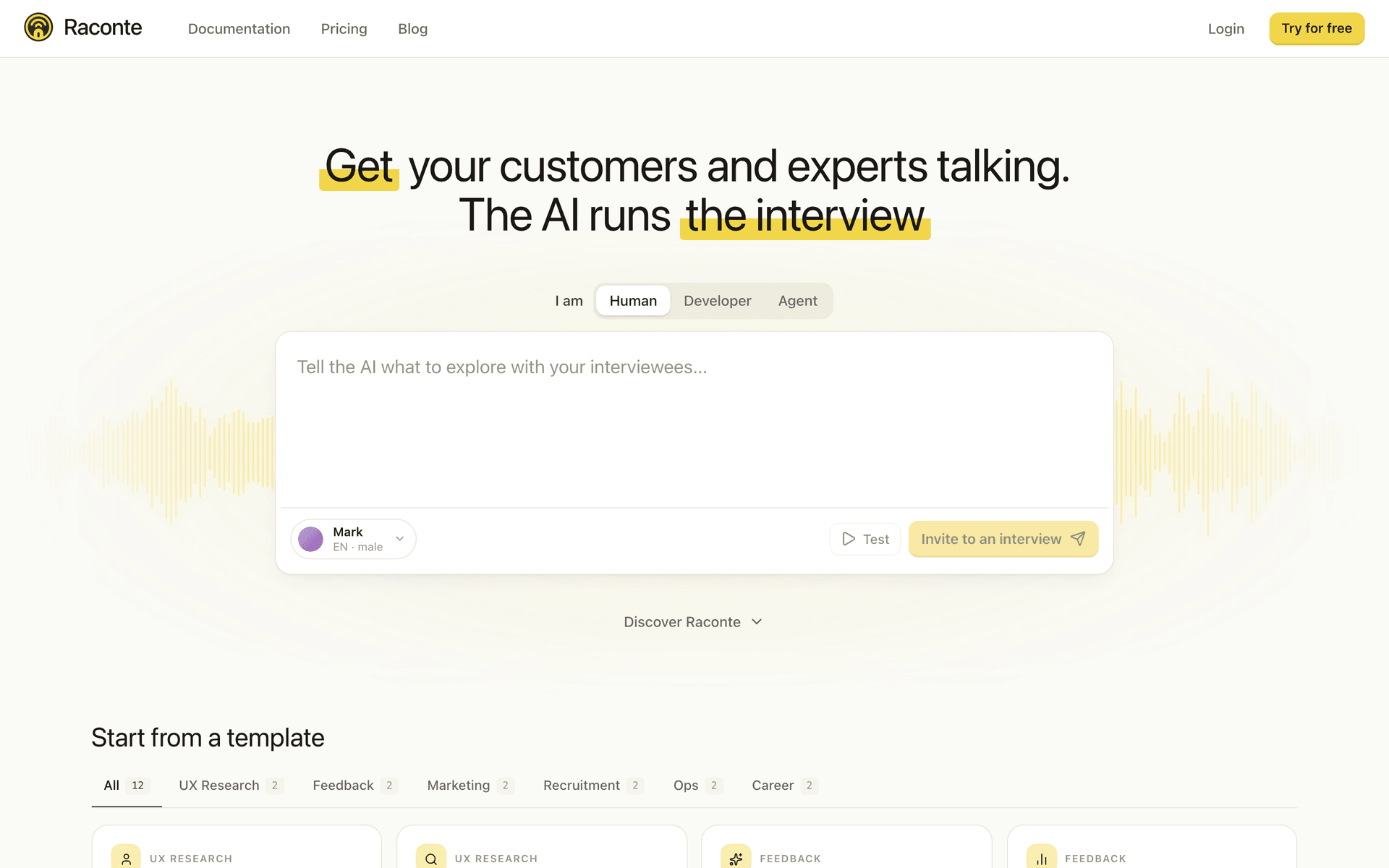
Raconte runs voice interviews with an AI. A team writes the interview as a prompt, then sends a link or an email invitation, in bulk from a list if needed. The customer opens the link in a browser, with no account and nothing to install, and talks for a few minutes whenever it suits them. The AI asks a follow-up question when an answer stays vague. A few seconds after the call, the team gets the full transcript, the replayable audio, per-message sentiment and a summary, and aggregated reports across all the interviews of a study.
The first 60 interview minutes each month are free and need no card. After that, Raconte charges $0.12 per minute of active speech, silences excluded, with top-ups from $12 and no subscription, which puts a ten-minute interview at about $1.20. A score that takes two minutes is cheaper to collect with a form. For the per-minute price, a team gets the open answer a form rarely collects, since the customer explains in their own words and the AI asks for the details. Raconte also sells an Enterprise plan, with volume discounts, white-label, SSO and an SLA.
Raconte can be driven entirely from code. Its OpenAPI spec is public at raconte.ai/openapi.json, @raconte/cli and @raconte/node-sdk are on npm, the MCP server exposes eight tools to AI agents, and webhooks fire when an interview starts and when it ends. Raconte has no built-in connector to analytics or billing tools, so to send the interview link when a customer cancels in a billing tool, a team goes through the API, n8n or Make. The upside is that any tool able to call a webhook can start an interview.
Interviews run in English and French only. The voices in those two languages were picked one by one for their intonation and accent. The voice catalog is on a public endpoint, so you can listen to the voices before sending anything to a customer. The homepage also plays a recorded demo interview. The application, the database and the AI providers for voice, transcription and text all run in France. Raconte lists every sub-processor by name.
Raconte has no in-app widget, no NPS dashboard and no participant panel. It interviews the customers a team already has and sends the results to the team’s other tools through the API and the webhooks.
2. UserCall
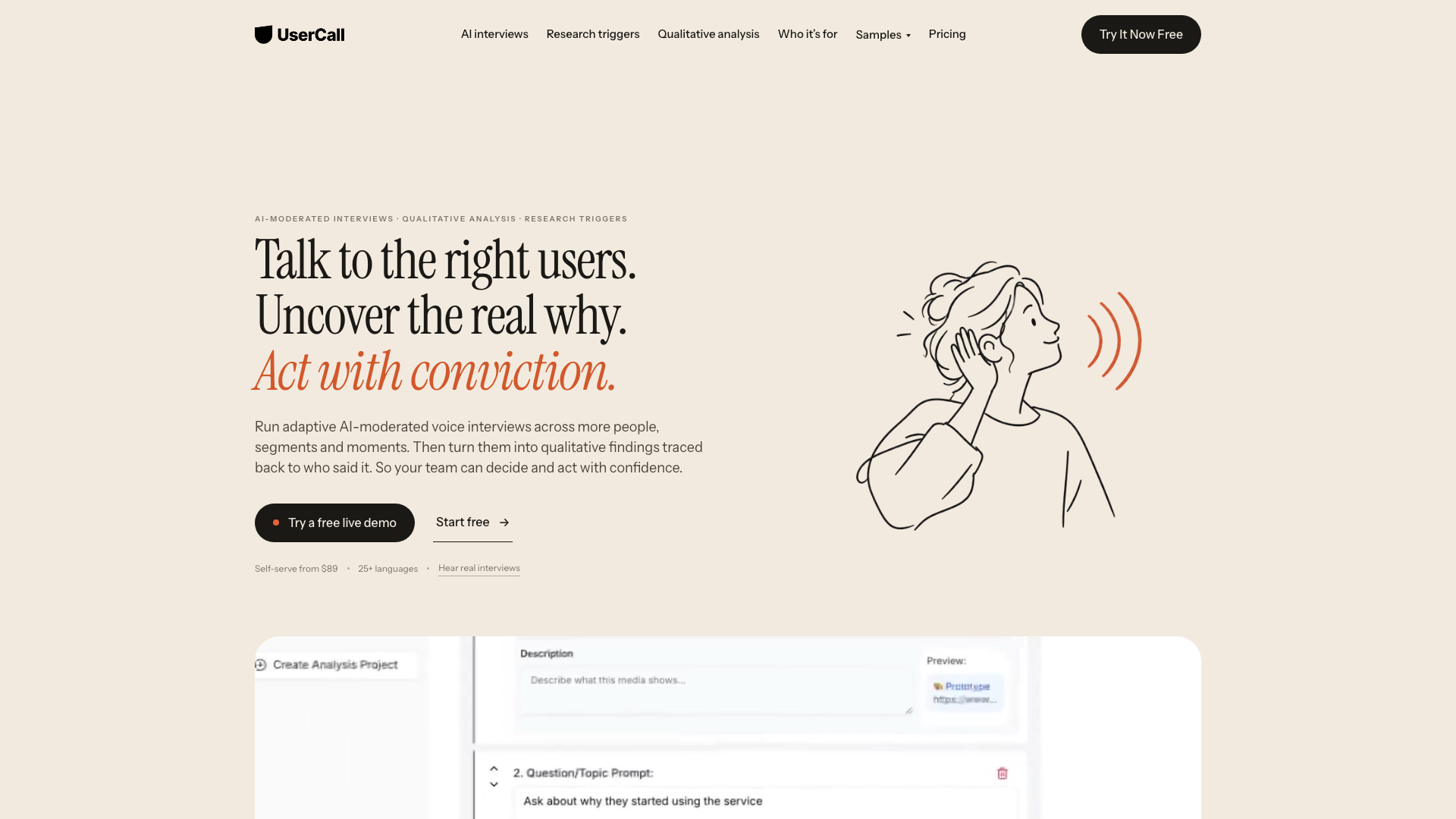
UserCall was founded in 2024 in San Francisco by Junu Yang, previously a designer at IDEO, frog and R/GA. Its AI moderator runs voice interviews and decides in the moment whether to probe, clarify or move on, then produces a thematic analysis where each finding links back to the quote it came from.
What sets UserCall apart is its research triggers. An interview can start from a product event, such as a cancellation, a signup, an abandoned checkout or an NPS answer, through integrations with PostHog, Mixpanel, Amplitude, Segment and Stripe. That makes it a natural fit for a product team that already tracks those events. Teams can also watch interviews live and, as an add-on, make outbound phone calls.
The first interview is free with no card. After that, there is no free plan. Lite costs $89 a month for 100 credits, which UserCall says covers ten to twenty interviews of up to twelve minutes. Core costs $199 a month and Pro $399. UserCall documents a REST API, webhooks and an MCP server. Its API reference lists French among more than 25 languages. Electrolux, ClassDojo and Rice University are named customers.
3. Perspective AI
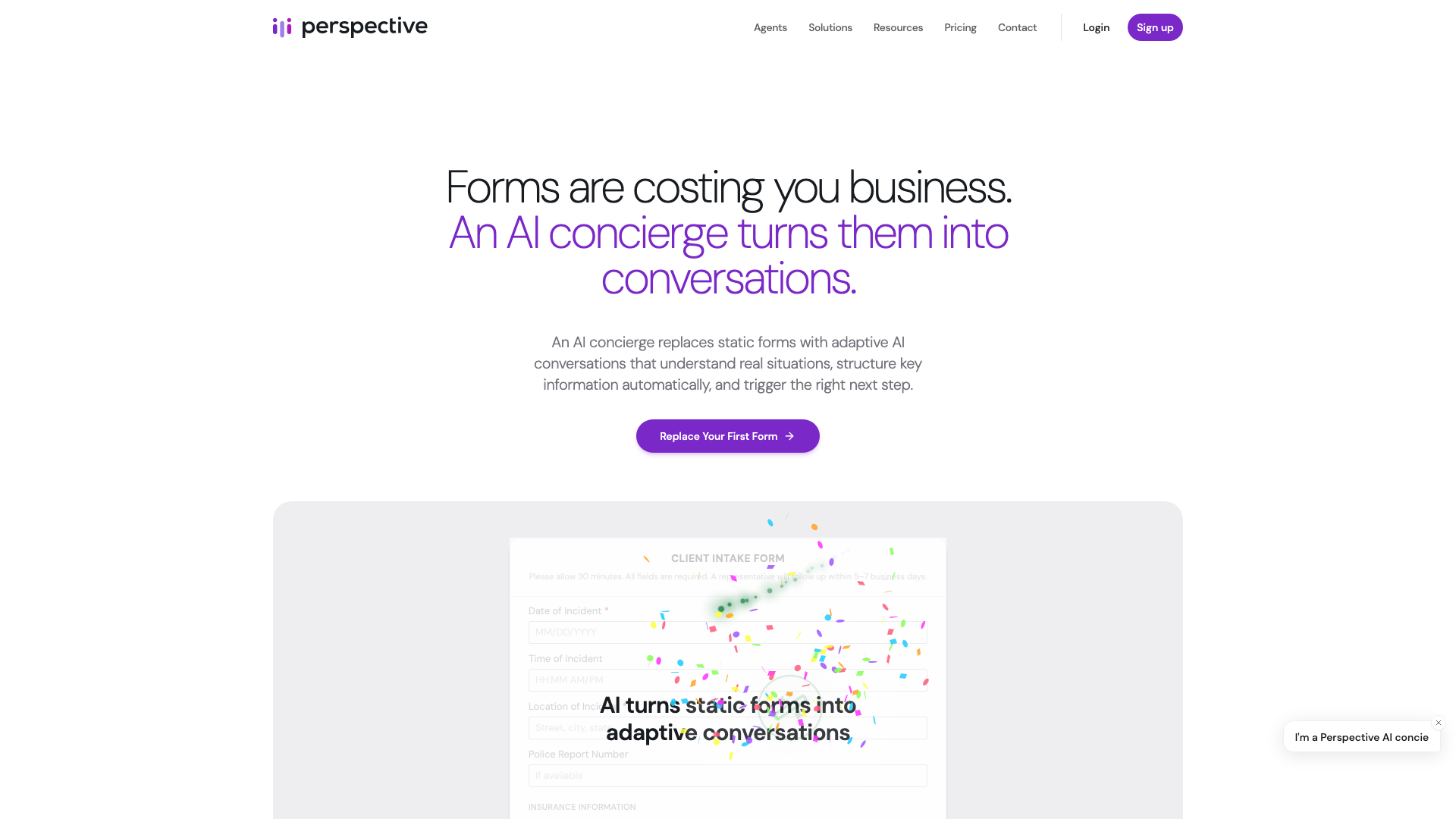
Perspective AI was founded in 2024 in Palo Alto by Guy Nirpaz, who previously founded the customer success platform Totango, and came out of stealth in January 2025 with a $4M seed round. It started as an AI interviewer for customer conversations. It is now sold as a way to replace static forms with AI conversations, for intake and qualification as well as feedback.
Its agents hold a conversation by voice or text, follow up in real time, pull structured data out of the answers and can trigger a workflow when the conversation ends. You share a conversation as a link or embed it in your product with an SDK or an iframe. Perspective AI claims more than 100 languages.
Pricing is published. The free plan gives 100 credits at signup. One conversation uses 10 credits, so the free plan covers about ten conversations. Pro costs $99 a month for 1,000 credits, about a hundred conversations. Enterprise is on quote. Developers get a REST API, webhooks with retries, an embed SDK and an MCP server. Google, Stripe, GitHub and Salesforce appear among the logos on its homepage.
Survey and form tools
These tools ask after the event, by link or by email: after a purchase, a support ticket, a training session. They give you a score you can track over time. When the open question matters, choose carefully which questions go in a customer feedback form.
4. Tally
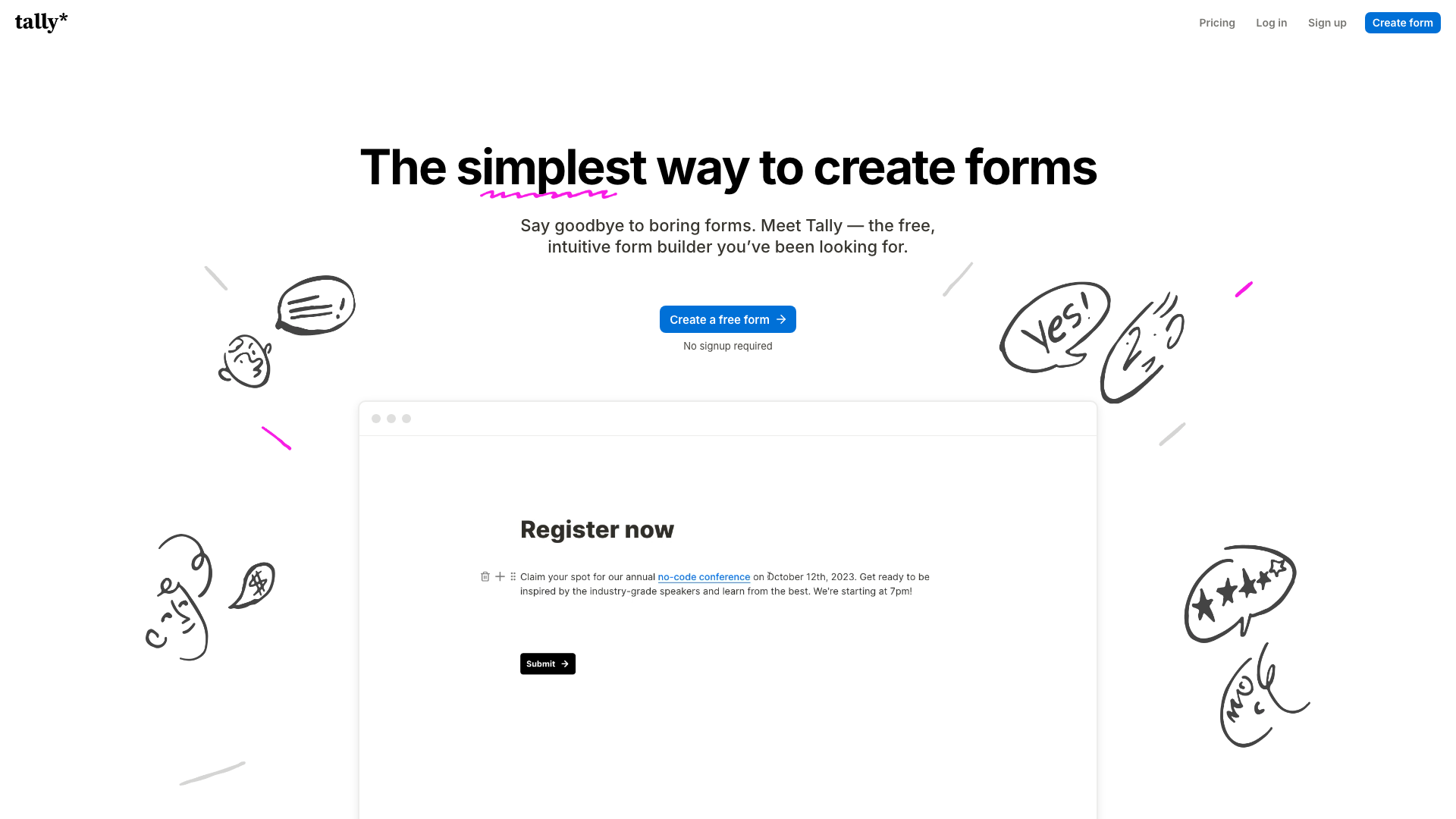
Tally was founded in 2020 in Ghent, Belgium, by Marie Martens and Filip Minev. The company is bootstrapped, has about ten people, and announced $6M in annual recurring revenue and 2.5 million users in September 2026. Its builder works like a text document: you type a question on a blank page and the form takes shape as you write.
The free plan is the most generous in this comparison: unlimited forms and unlimited submissions within fair use, with conditional logic and webhooks included. Pro costs €20 a month and Business €65, for a custom domain, branding removal and team features. Tally AI can draft a form from a sentence. Follow-up questions come from the conditional logic you set up. Tally does not analyse the answers.
Tally hosts its data in the EU, supports forms in more than 45 languages and has a public API, webhooks and an MCP server, which is in beta and free on every plan. Notion, Make and Glovo are named users. For a feedback form that needs to work today without a budget, it is the obvious starting point.
5. Typeform
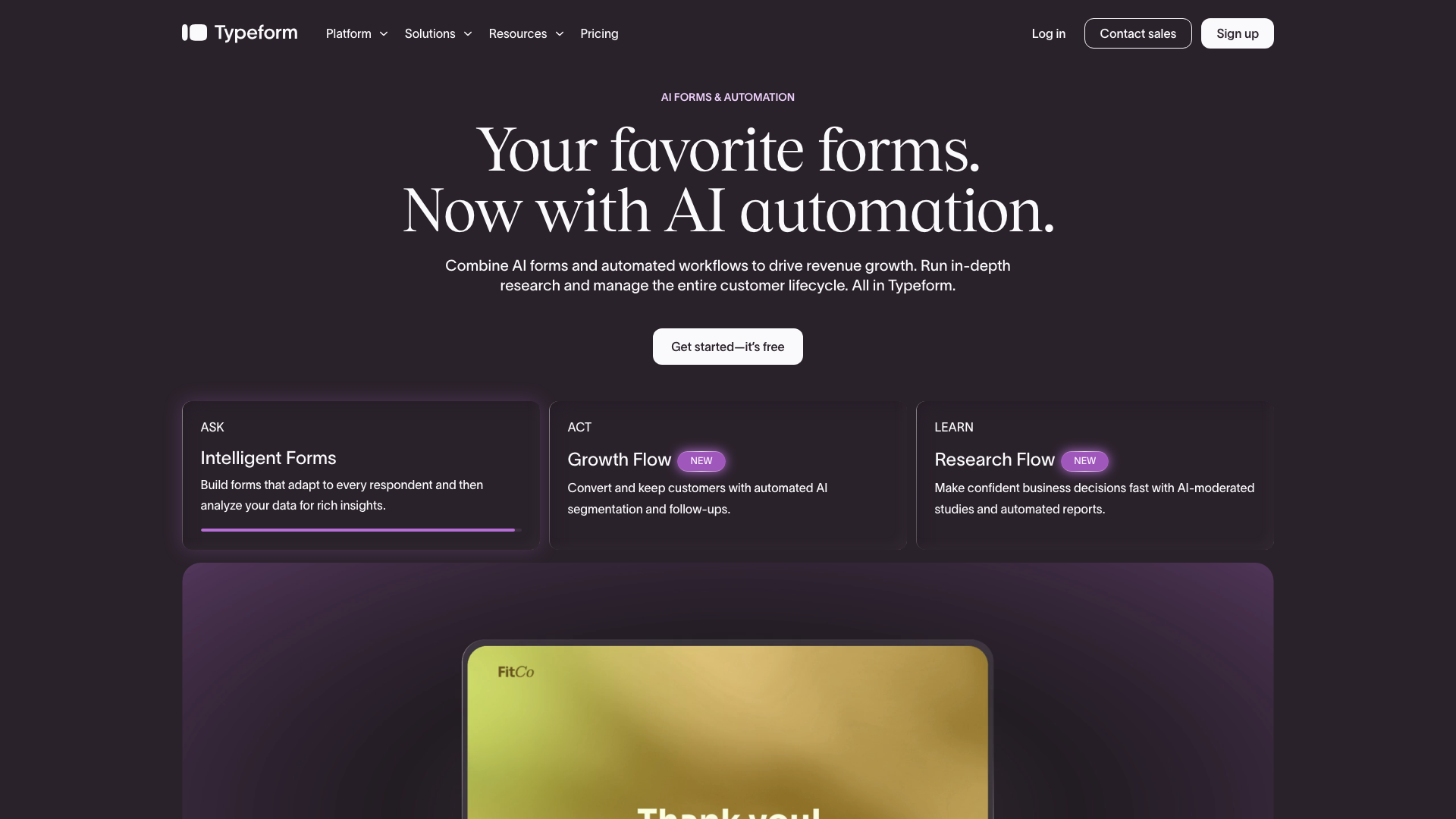
Typeform was founded in Barcelona in 2012, made the one-question-at-a-time form popular, and still makes the most polished one. It has more than 250 employees and raised a $135M Series C in 2022.
For customer feedback, its forms handle NPS, CSAT and open questions, sent by link, email or embed. Clarify with AI, available from the Talent plan at $169 a month, asks up to two typed follow-up questions when an open answer stays short. In June 2026 Typeform launched Research Flow, a separate product sold through its sales team, which runs AI-moderated studies in text, voice or video. VideoAsk, also from Typeform, collects asynchronous video and audio answers.
The free plan stops at 10 responses a month. Basic costs $39 a month for 100 responses ($28 billed yearly), Plus $79 for 1,000 and Business $129 for 10,000. Typeform has a REST API, webhooks and an official MCP server, forms in about 28 languages including French, and Slack, HubSpot and Calendly among its customers.
6. SurveyMonkey
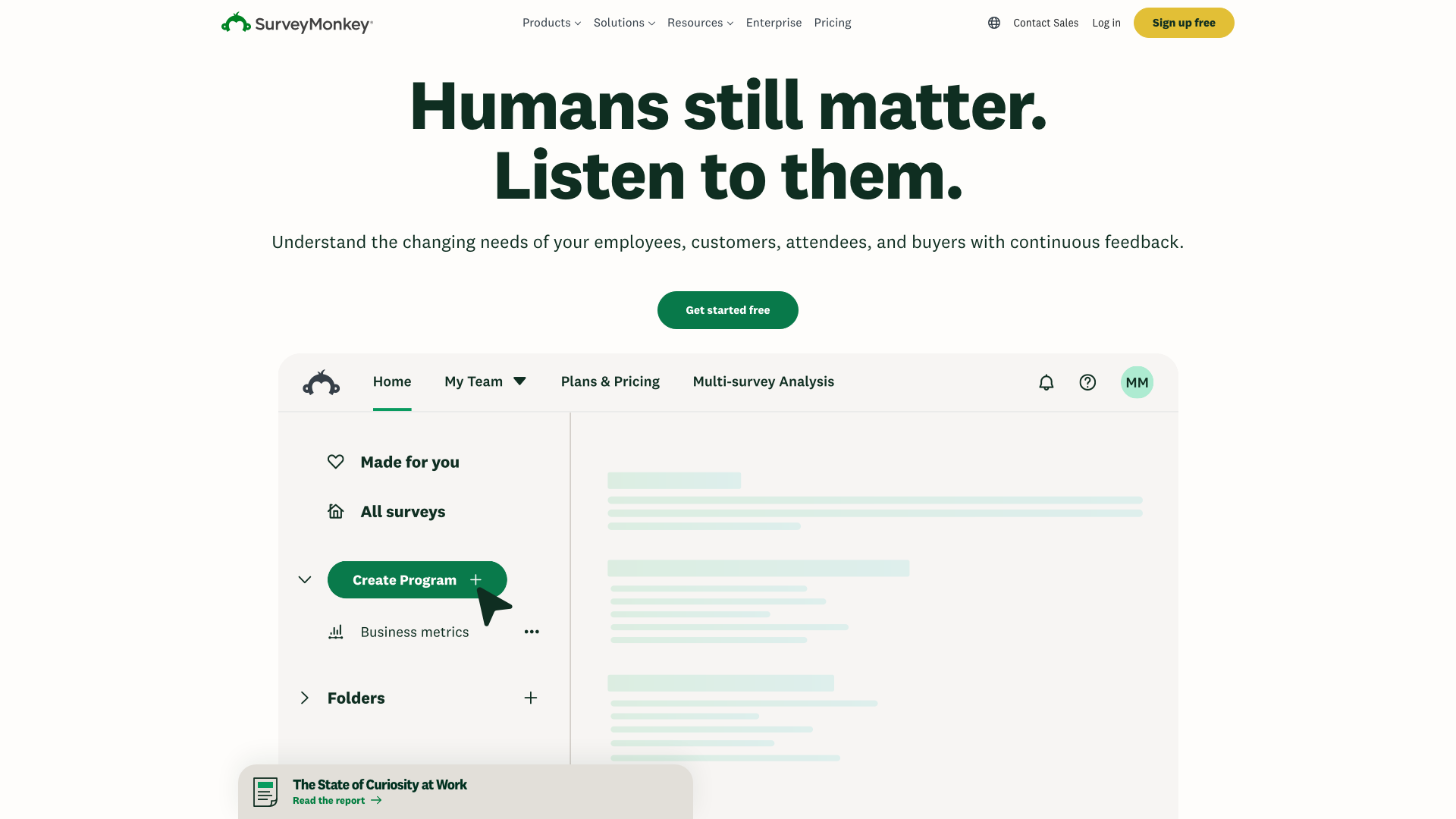
SurveyMonkey has made online surveys since 1999. The company renamed itself Momentive in 2021, was bought by a consortium led by Symphony Technology Group for about $1.5 billion in 2023, and went back to the SurveyMonkey name.
It is the most complete survey tool here for quantitative work: NPS and CSAT templates, crosstabs, statistical significance, benchmarks and a respondent panel. Its AI analyses open answers after collection, with themes, sentiment and written summaries. In 2026 it added GetFeedback for on-site feedback and continuous feedback programs. Follow-up questions inside a survey come from skip logic you set up.
The free Basic plan limits a survey to 10 questions. SurveyMonkey’s European price list starts at €39 a month on monthly billing, with 1,000 responses, or €36 a month for Advantage billed yearly. Team plans cost €30 per user per month, with three users minimum. It has a REST API with webhooks, a Claude connector announced in May 2026, an app in 16 languages including French, and Ryanair, Box and ClickUp among its customers.
In-app and on-site feedback tools
These tools ask while people use your website or product, through a small prompt, a widget or a one-question survey at the right screen. Each answer is saved with the page and the session it was given in.
7. Hotjar, now part of Contentsquare
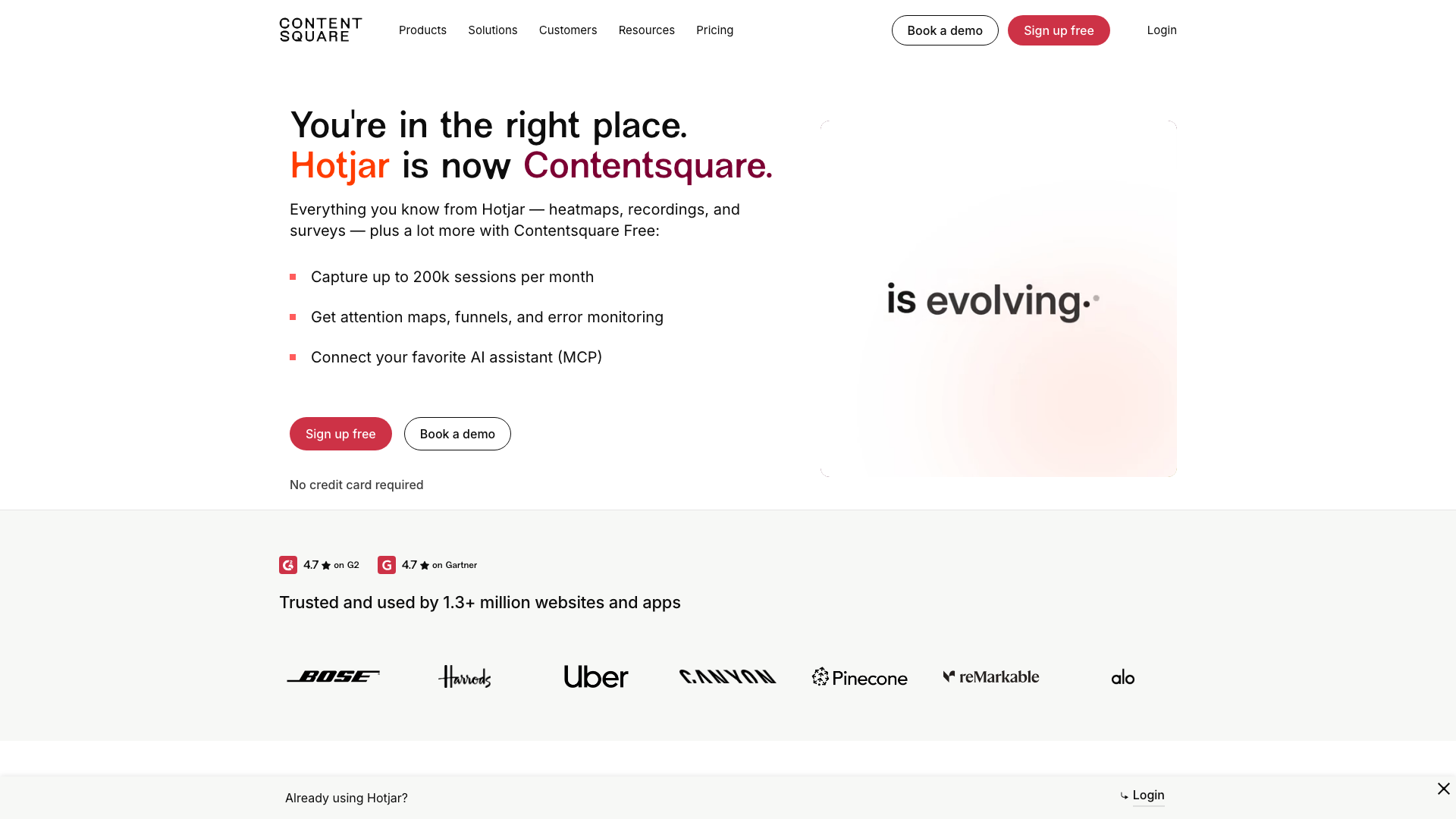
Hotjar started in Malta in 2014, was bought by the Paris company Contentsquare in 2021, and merged into the Contentsquare group on 1 July 2025. The hotjar.com domain now redirects to a Contentsquare page announcing that “Hotjar is now Contentsquare”. The plans are sold under the Contentsquare name.
The feedback tools are part of Contentsquare’s Voice of Customer product: surveys and feedback widgets on a website or in an app, an AI survey generator, AI summary reports, and automatic sentiment and topic tags on paid plans. Each answer links to the session replay of the person who gave it, so you can watch what happened just before they wrote it. Heatmaps and replays are a separate product, Experience Analytics, with its own free tier.
The free plan covers 100 responses a month and three active surveys or widgets. Growth starts at $99 a month for 500 responses and Pro is on quote. The API and response export come with Pro. Contentsquare also has an MCP connector. Surveys can show their interface text in more than 40 languages, French included. Renault Group, ASOS and Ryanair are named customers.
8. Pendo
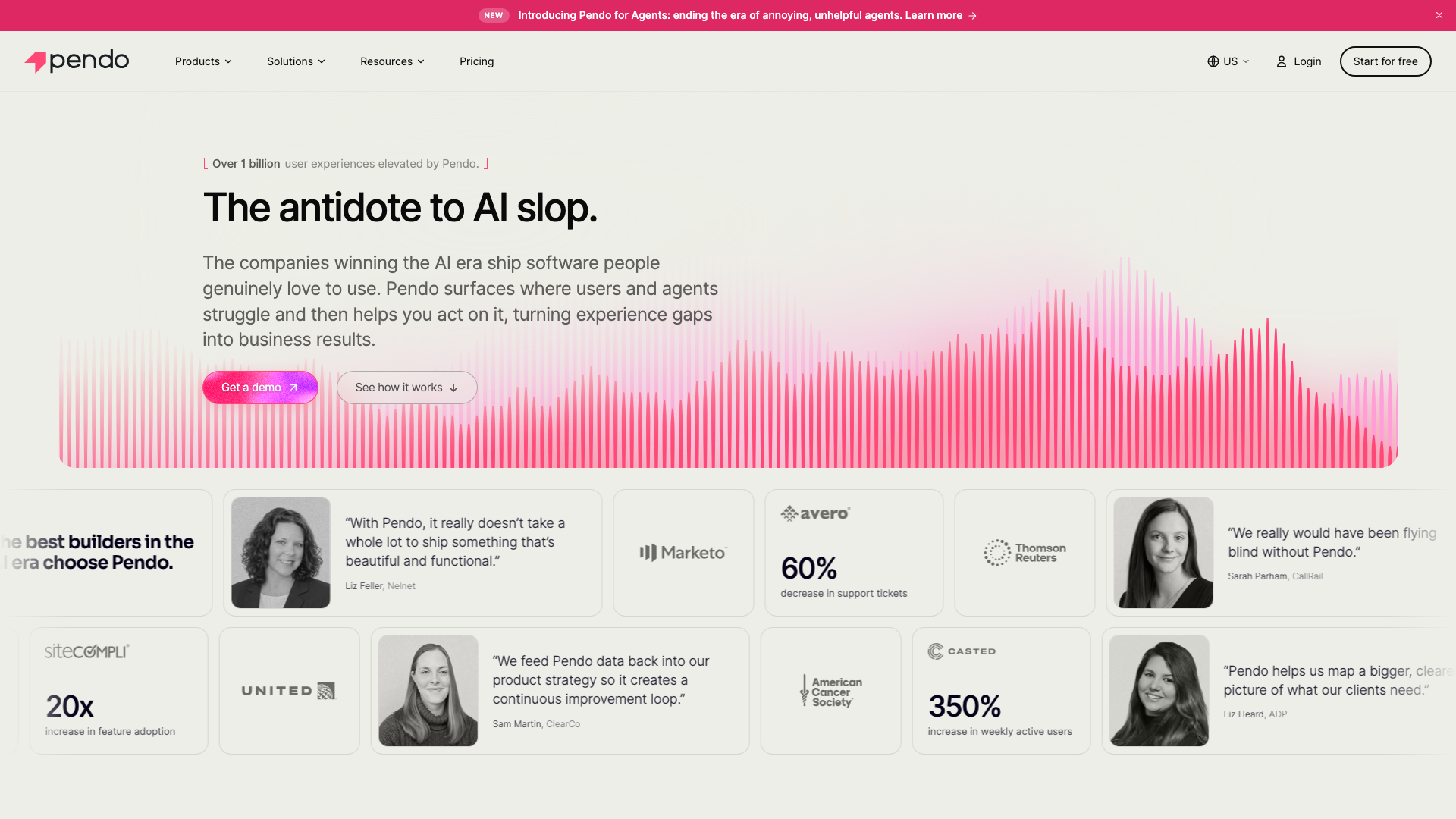
Pendo was founded in 2013 in Raleigh, North Carolina, employs more than 850 people and has raised $356M. It is a product experience platform: analytics, in-app guides, onboarding, session replay, and feedback on top.
Pendo retired its Classic Feedback module on 1 August 2026 and replaced it with Pendo Listen. Listen collects feedback in the app and pulls it in from Zendesk, Gong, Zoom, Teams and Salesforce, sorts it with AI, lets you ask questions of it in plain language and syncs ideas to Jira. The Sentiment module runs NPS, CSAT and product-market fit surveys inside the product.
The free plan covers up to 500 monthly active users, with analytics, in-app guides and Pendo-branded NPS surveys. Every paid plan is on quote. Listen comes with the top tier, Ultimate. Pendo has a REST API, webhooks and an MCP server, supports in-app content in French and many other languages, and names Salesforce, Cisco and Okta among its customers.
9. Sprig
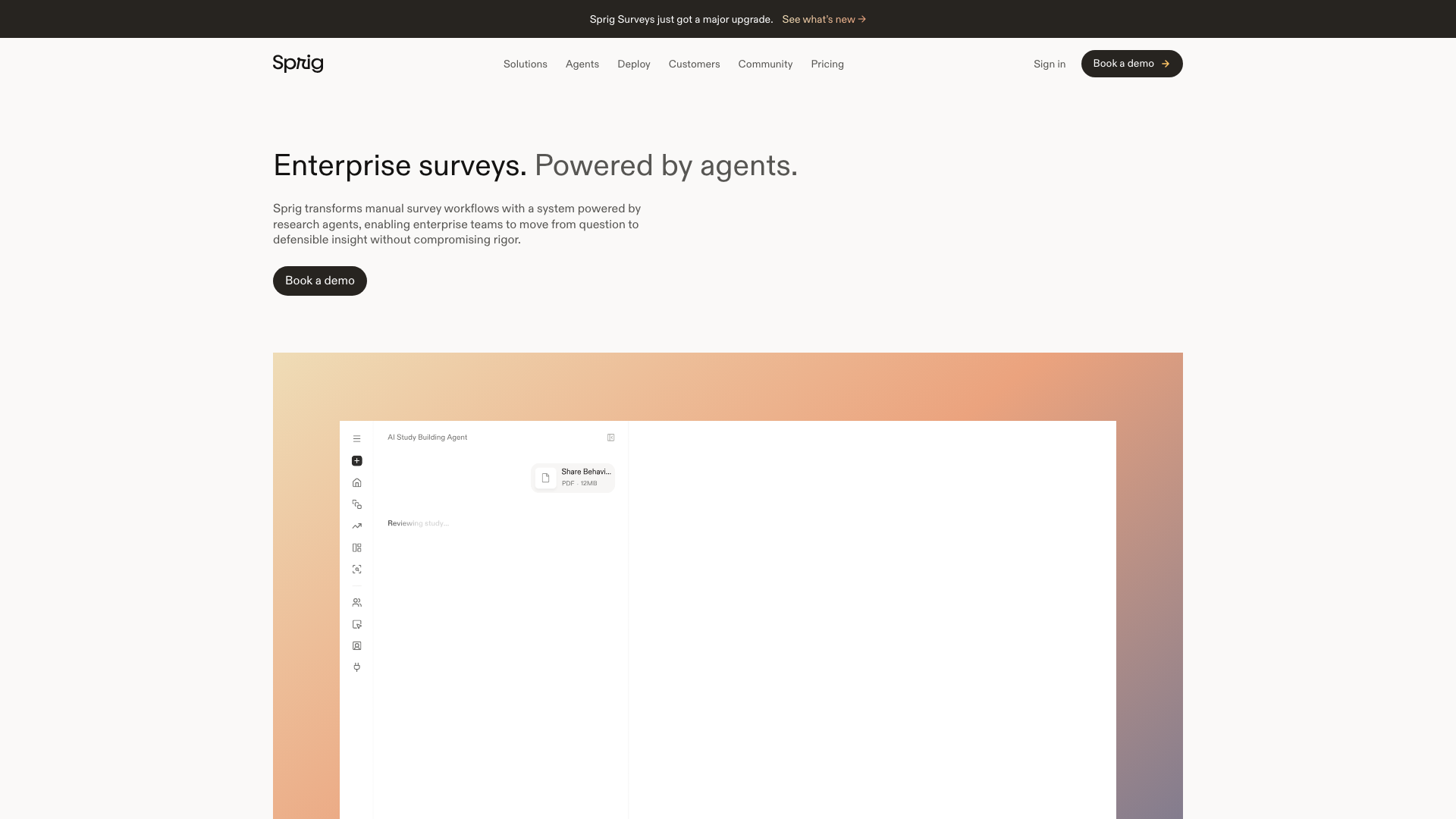
Sprig was founded in 2018 in San Francisco as UserLeap, renamed in 2021, and raised a $38M Series B led by Andreessen Horowitz. It made its name with short surveys inside web and mobile apps. It is now sold as an enterprise research platform run by AI agents.
Those agents draft a study, run adaptive surveys with AI follow-up questions on typed answers, analyse the results statistically and write the report. Surveys go out inside the product, by email, by link, and to a panel of more than 300,000 participants. In-product surveys, session replays and heatmaps are still part of the offer.
The pricing page shows no prices and no free plan. The only way in is a demo. Sprig has a data export API and webhooks, runs surveys in many languages with the interface translated into French among others, and names Figma, DoorDash, Notion and Square as customers.
Voice of the customer platforms
A large company uses these platforms to run one feedback program on every channel and for every team, with the dashboards, the alerts and the case management that go with it. They are sold on quote and usually rolled out with a services team. A smaller company can run a voice of the customer program with a shared table and a monthly round of interviews.
10. Qualtrics
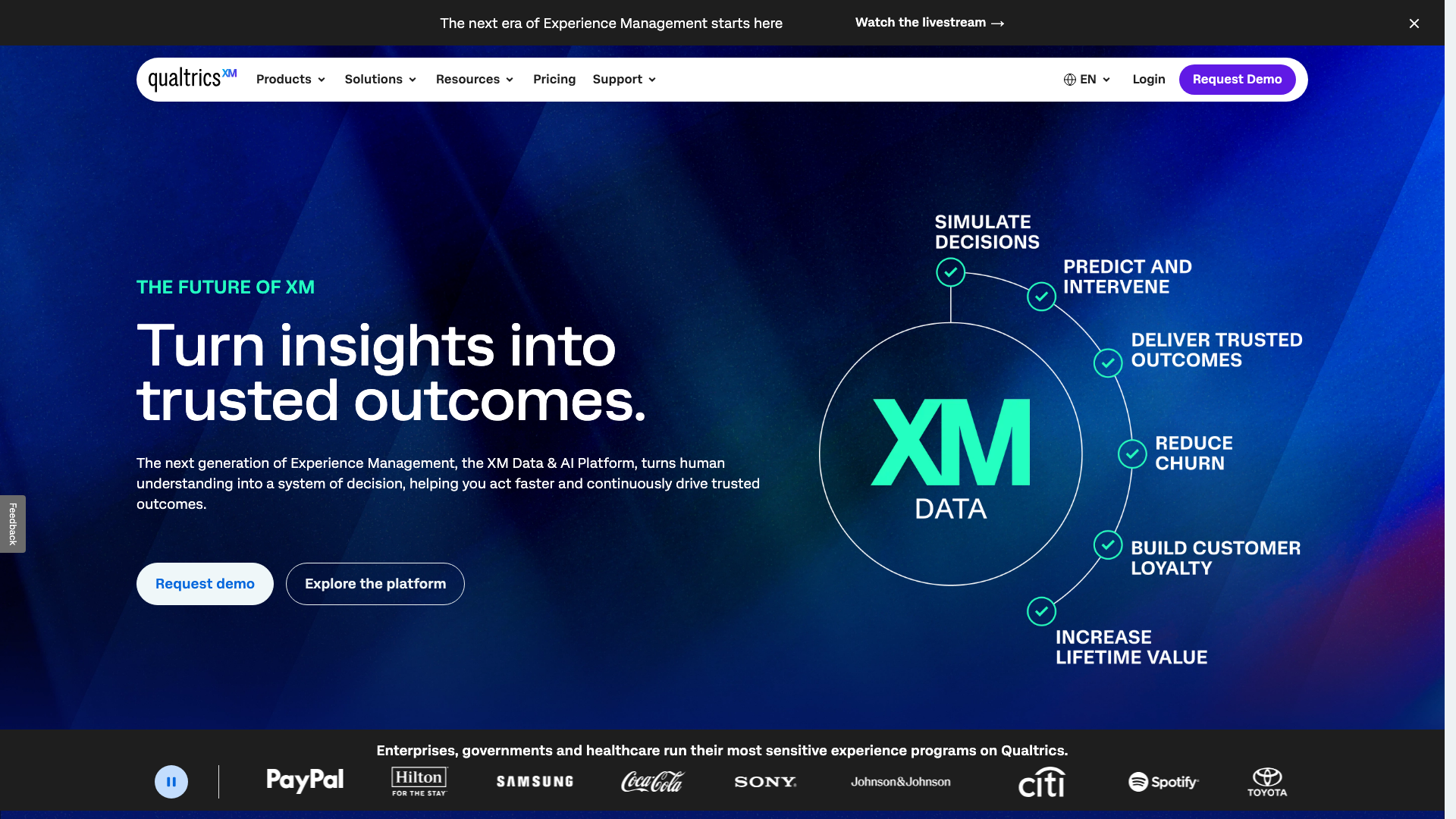
Qualtrics was founded in 2002 in Provo, Utah. Silver Lake and CPP Investments took it private for $12.5 billion in 2023. On 18 May 2026, it closed the $6.75 billion purchase of Press Ganey Forsta, a healthcare experience company that also owns InMoment. Qualtrics covers customer experience, employee experience and market research, with NPS, CSAT and CES programs, text analytics and AI agents.
Its Conversational Feedback feature checks whether an open answer is clear and generates follow-up questions on it. It works on typed answers, allows two follow-ups per survey, or one in languages other than English, and supports French among eight languages.
Pricing is on quote and based on usage. A separate free account allows three active surveys, 30 questions per survey and 500 responses, which is enough to test the survey builder. Qualtrics has a REST API and provides MCP servers for it. Goldman Sachs, BMW Group and HSBC are among its named customers.
11. Medallia
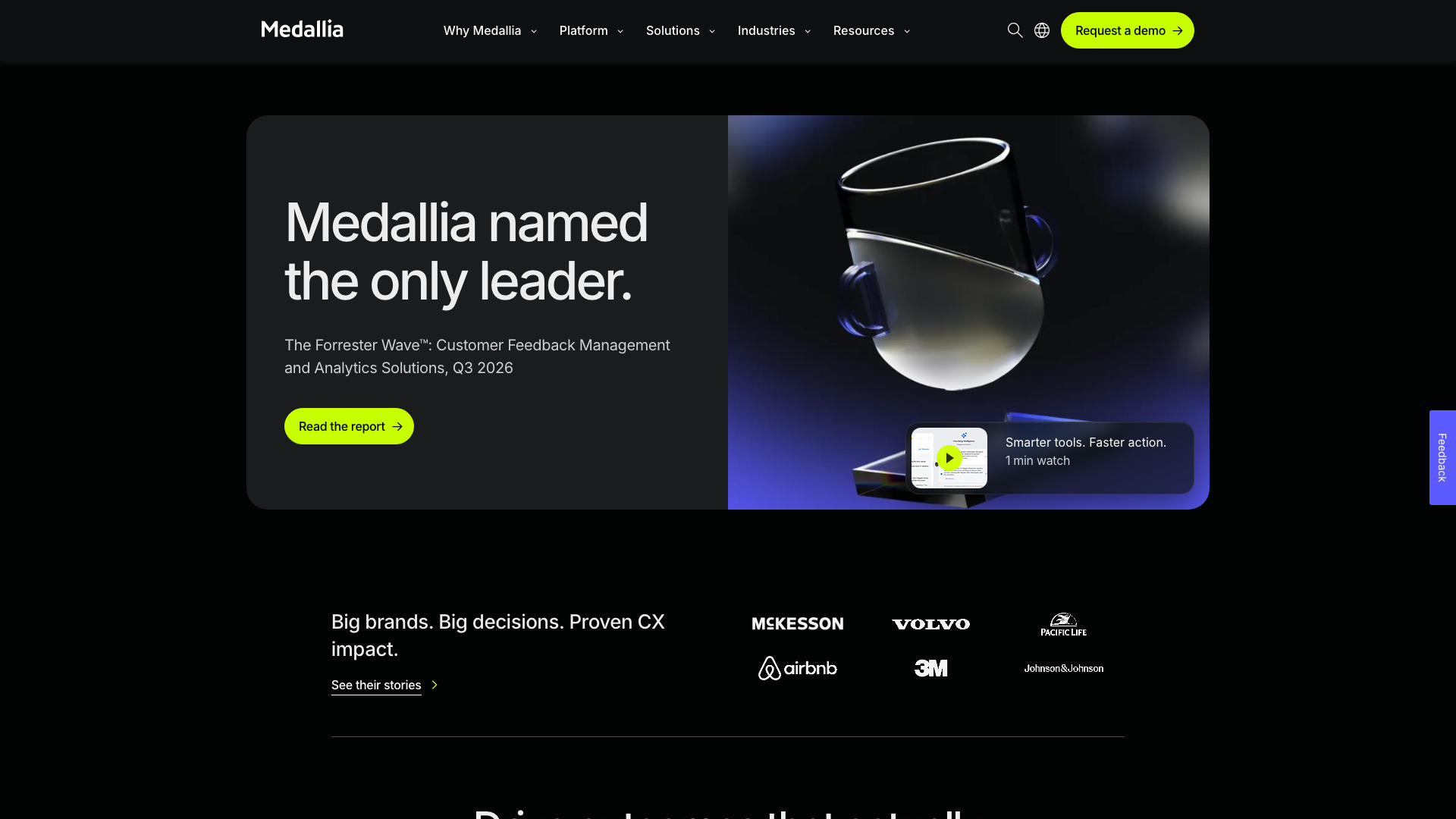
Medallia was founded in 2001 in San Francisco and has more than 1,800 employees. Thoma Bravo bought it for $6.4 billion in 2021. A lender group led by Blackstone, Apollo and FS KKR took over ownership in a recapitalisation that closed on 3 August 2026. Its homepage cites a Q3 2026 report on customer feedback management by the research firm Forrester, which names Medallia as the only leader.
Medallia collects surveys across web, app, SMS and push, and analyses contact center calls and chats. It also captures video and voice feedback through LivingLens, a company it acquired. Its September 2026 release added AI summaries, root cause suggestions, AI themes and suggested replies to customers.
Pricing is on quote, based on volume of experience records with unlimited users. There is no free plan or trial. Medallia documents REST and query APIs and webhooks. Mayo Clinic Laboratories, Mazda North America and Santander Bank are named in its 2026 releases. Its About page claims nine of the Fortune 10 as customers.
How to choose between them
Start from the question you need answered, because each group answers a different one.
- How satisfied are customers, and is it moving? Take a survey tool. Tally costs nothing for that, Typeform looks better, SurveyMonkey goes further on statistics. We compared Typeform, Tally and Google Forms in more detail, and listed what a satisfaction score will and will not tell you.
- Where do people get stuck in the product? Take an in-app tool. Contentsquare links each answer to a session replay, Pendo ties feedback to analytics and onboarding, and Sprig suits a research team with an enterprise budget.
- Why did they give that score, cancel, or stop using a feature? Take an interview tool. Raconte runs the interview as a spoken conversation by link, in English or French, with a monthly free allowance. UserCall starts interviews from product events through its analytics integrations. Perspective AI also replaces intake and qualification forms. If one spoken answer to a survey question is enough, take a voice survey tool that records it.
- How do you run one program across stores, call centers and digital channels? Take a voice of the customer platform. Qualtrics and Medallia both do it, on quote.
Many teams pair two tools: a survey or an in-app prompt to measure, then an interview with the customers whose score needs explaining. Webhooks automate the handoff: a low NPS answer in Typeform, Tally or SurveyMonkey can trigger an interview invitation through n8n or Make.
If you need French or EU hosting, the list gets short fast. For French, check the language of the conversation as well as the interface: Raconte interviews in French and English only, UserCall lists French among more than 25 languages, Perspective AI claims more than 100 languages, and Qualtrics limits its AI follow-up to one question outside English. If your data has to stay in the EU, Tally and Raconte both host it there. Ask the others in writing, since where they host the data often depends on the plan or the contract.
Other tools came up in our research and did not make the list for lack of room: Survicate, which also adds AI follow-up questions, Userpilot for in-app surveys, SurveySparrow, Zonka Feedback and AskNicely for NPS programs, Canny for feature request boards, and Enterpret for analysing the feedback you already have.
Frequently asked questions
What is a customer feedback tool?
A customer feedback tool is software that asks customers for their opinion and collects the answers in one place. The category covers four kinds of products: survey and form builders sent after an event, in-app prompts shown while people use a product, interview tools where an AI or a person holds a conversation, and voice of the customer platforms that run one program across every channel of a company. Most teams need one tool to measure a score and another to understand it.
What is the best free customer feedback tool?
For forms, Tally has the most generous free plan in this comparison, with unlimited forms and responses within fair use and data hosted in the EU. For in-app feedback, Pendo is free up to 500 monthly active users, and Contentsquare, which now sells Hotjar, offers 100 responses a month. For interviews, Raconte gives 60 interview minutes every month without a card, which covers about six ten-minute conversations.
What are examples of customer experience (CX) tools?
Qualtrics and Medallia are the best-known enterprise CX platforms, with InMoment, now part of the Qualtrics group, close behind. Survey tools such as SurveyMonkey and Typeform, in-app tools such as Pendo and Contentsquare, and NPS platforms such as Zonka Feedback and AskNicely also count as CX tools. Interview tools such as Raconte, UserCall and Perspective AI sit on the qualitative side, where the goal is to understand a score rather than to track it.
What happened to Delighted?
Qualtrics shut Delighted down on 30 June 2026, after stopping annual renewals in July 2025. The delighted.com domain now redirects to a Qualtrics page that points former users to Qualtrics. Teams that sent NPS or CSAT surveys with Delighted can move to Qualtrics, to a survey tool such as Typeform, SurveyMonkey or Tally, or to an NPS platform such as Zonka Feedback or AskNicely.
Can a feedback tool ask follow-up questions automatically?
Yes, though the depth varies a lot. Typeform, Qualtrics, Sprig and Survicate add one or two AI-generated typed questions to a survey. Interview tools go further: Raconte, UserCall and Perspective AI hold a whole conversation in which the AI asks for details whenever an answer stays vague. Rule-based follow-ups, such as a different open question for detractors, exist in almost every survey tool.
How much do customer feedback tools cost?
Survey tools start free, with paid plans from €20 a month on Tally to $169 on Typeform’s Talent plan, which adds AI follow-up questions. Contentsquare and Pendo start free on small volumes. Above that, Contentsquare’s Growth plan costs $99 a month and Pendo moves to quotes. Sprig is on quote only. Interview tools bill by usage: Raconte charges $0.12 per minute of speech after 60 free minutes a month. UserCall and Perspective AI sell monthly credit packs from $89 and $99. Qualtrics and Medallia are on quote only.
Which customer feedback tools work in French?
Most of them can show their form or survey interface in French: Tally, Typeform, SurveyMonkey, Contentsquare, Pendo and Sprig all do. For spoken interviews, Raconte runs in French and English only, UserCall lists French among more than 25 languages, and Perspective AI claims more than 100. Qualtrics supports French for its AI follow-up question but allows only one follow-up per survey outside English.
Can an AI agent collect customer feedback on its own?
Yes, when the tool exposes an MCP server or an API the agent can call. Raconte, UserCall, Perspective AI, Typeform, Pendo, Contentsquare and Qualtrics publish an MCP server, Tally has one in beta, and SurveyMonkey has a Claude connector. Through them, an agent can create a survey or an interview, send it and read the answers back, so a sales or support agent can ask a customer for feedback without a person setting up the study.
Where to start
Measuring and understanding are two different purchases. A survey or an in-app prompt tells you how many customers are unhappy and where. To know why, and what would change their mind, you need to hear them explain it in their own words, in an interview.
If the score is already there and the reason is missing, that is the job we built Raconte for. Write the interview as a prompt, send the link to the customers whose answers worry you, and read the transcripts the next morning. The first 60 minutes each month cost nothing and need no card. After that, you are billed by the minute. If you are still choosing between running interviews with an AI and recruiting participants, we compared both kinds of user interview platforms.


